

Closed (outdated)
Project:
Role Delegation
Version:
6.x-1.x-dev
Component:
Miscellaneous
Priority:
Normal
Category:
Support request
Assigned:
Unassigned
Reporter:
Created:
2 Jan 2009 at 14:29 UTC
Updated:
10 Mar 2016 at 13:54 UTC
Jump to comment: Most recent, Most recent file

Comments
Comment #1
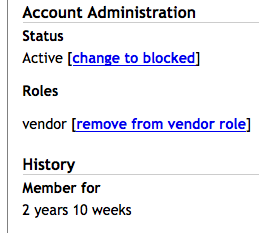
deekayen commented13 months ago, I wrote admin_delegation and put it in my sandbox. It does basically the same thing, in a different way (it even directly accesses the user table instead of proper API functions).
The primary differences are that it
I wrote it for a site that has 80 modules, 30 content types, and 30 roles, so putting the role delegation on a separate permissions page was intentional because the core permissions grid was becoming incredibly large. I also called it admin delegation because I can see it growing into other delegated permissions (like status, email update, password reset). Combined with User Read-Only, that would mean users can be blocked from updating their own email unless they contact a user moderator, for example.
Comment #2
david lesieur commentedJust tried your module... It seems well thought out. It looks like it could supersede Role Delegation!
Some of Role Delegation's issues would apply to admin_delegation as well, such as #341165: Module should use user_save instead of directly accessing drupal database (drupal6 patch).
Comment #3
david lesieur commentedA drawback that comes to mind: Since your module inserts its functionality into the standard user view page, it won't be accessible when that page is overridden (with Content Profile, for example). Because of this, it might be a good idea to provide the functionality in a separate tab.
Comment #4
benjy commentedDrupal 6 support has now been dropped.