The 2026 Drupal Business Survey is open. Your response will help shape the future of the Drupal business ecosystem.
This project is not covered by Drupal’s security advisory policy.
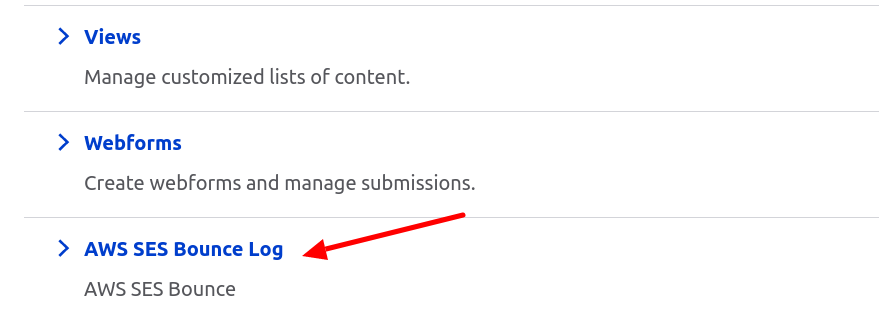
AWS SES Email Bounce
if Drupal is integrated with SES for sending emails. then, our applications send different types of emails like thank you emails, admin emails, etc. Now these admin emails are static email ids that are added across the webforms to receive notifications. If any of these email ids have been removed from the respective organisations then the SES receives a bounce and on every such instances the bounce rate increases. The risk of a high bounce rate is that SES would temporarily stop the application's email-sending capability and restarting it is a challenge. The bounce rate limit is somewhere around 4%.
Table of contents
- Requirements
- Installation
- Configuration
- AWS SES Bounce Configuration
Requirements
- Require Webfrom module
Installation
Install as you would normally install a contributed Drupal module. For further
information, see
[Installing Drupal Modules](https://www.drupal.org/docs/extending-drupal/installing-drupal-modules).
Configuration
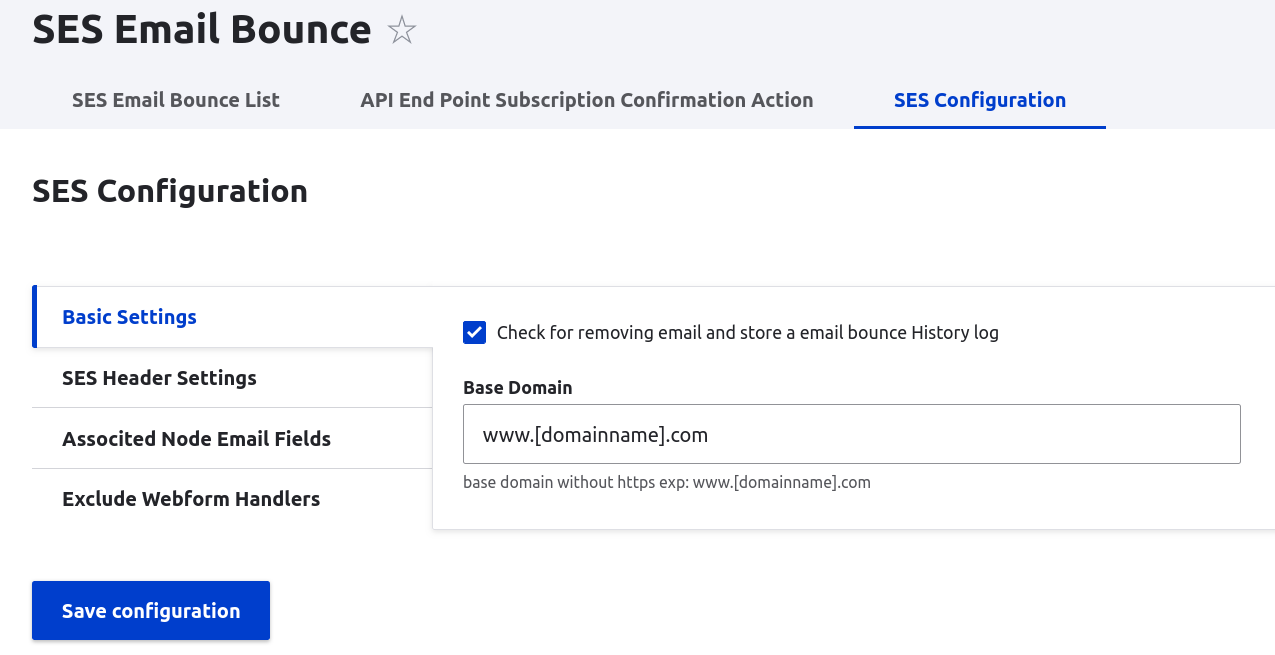
- Visit admin/ses_email_bounce/config to configure.
- Check box to activate the removal of email from webform handler and node field.
- Enter headers provided by AWS SES Ses X amz sns topic arn .
- Check the email type of node fields in which you want to remove emails.
- Check webform handlers to exclude for removing email -to_mail, cc_mail and bcc_mail .
- Bounce email log history will show in admin/ses_email_bounce/logs.
AWS SES Bounce Configuration
- API endpoint [domainname]/ses-api/subscribtion ( will use in AWS SES Bounce).
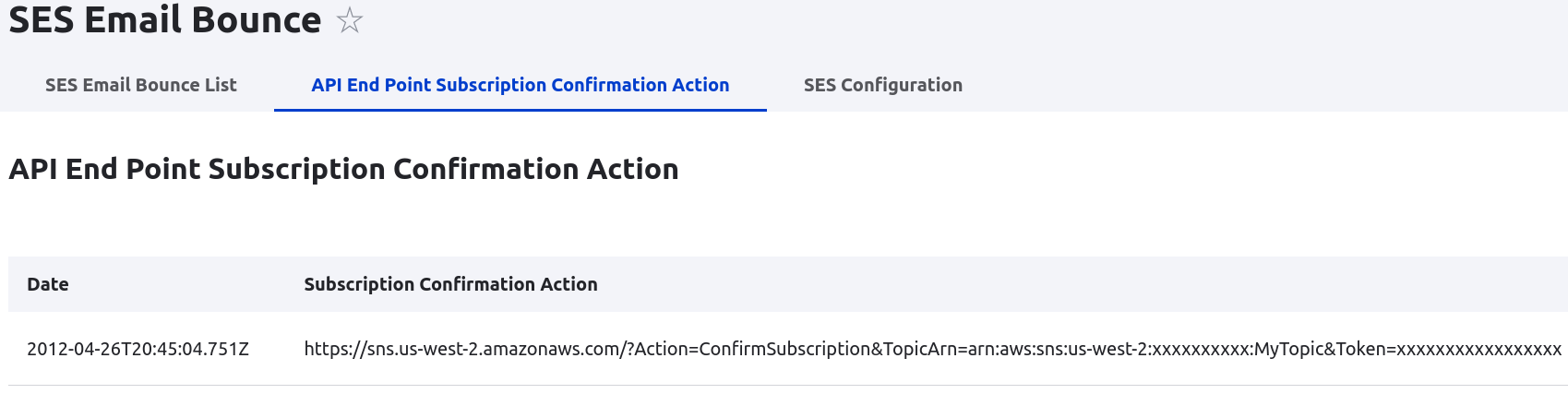
- API subscription confirmation will one time.
- After configuring the API endpoint and calling a subscription will show in the ses module dashboard at /admin/ses_email_bounce/confirmation copy that action URL and run it in any browser and then check in ses in aws ses endpoint subscription is confirmed or not.
Supporting organizations:
Project information
- Project categories: Integrations
 6 sites report using this module
- Created by mmdasif0204 on , updated
 This project is not covered by the security advisory policy.
Use at your own risk! It may have publicly disclosed vulnerabilities.
Releases
1.1.0-alpha1
released 13 November 2023
Works with Drupal: ^9.4 || ^10
Install:
Development version: 1.1.x-dev updated 28 May 2024 at 09:43 UTC