

Add functionality and customize your Drupal application with thousands of projects contributed by our amazing community.
A module is code that extends Drupal's by altering existing functionality or adding new features. You can use modules contributed by others or create your own. Learn more about creating and using Drupal modules.
Trash
This module adds a trash bin for all content entities. When deleting an entity, it will be moved to the trash instead of being deleted and thus can be restored or permanently deleted later on. See...
Categories: Content editing experience
 Flag
Flag is a flexible flagging system that is completely customizable by the administrator. Using this module, the site administrator can provide any number of flags for nodes, comments, users, and...
Categories: Automation, Content editing experience, User engagement
Paragraphs Features
Paragraphs Features This module provides few additional features for paragraphs module. Available features 1. Add In Between This feature provides additional buttons between paragraphs for...
Categories: Content editing experience
Taxonomy Menu
The Taxonomy Menu module provides a way to synchronize Taxonomy vocabularies with Drupal's Menu system. Key Features Vocabulary Sync: Map any taxonomy vocabulary to a specific Drupal menu. Dynamic...
Menu Attributes
This simple module allows you to specify some additional attributes for menu items such as id, name, class, style, and rel. You should use this module when You want to "nofollow" certain...
Categories: Administration tools, Site structure
 SVG Image Field
This module adds a new field, widget, and formatter that allow Vector files with the .svg extension to be uploaded and managed by Drupal. Support for the Media Library in Drupal core as well as...
Categories: Content display, Media, Site structure
Hypermedia Application Language (HAL)
Hypertext Application Language (HAL) is a format that supports the linking required for hypermedia APIs. Hypermedia APIs are a style of Web API that uses URIs to identify resources and the link...
Social Media Links Block and Field
The modules provides a configurable block that display links (icons) to your profiles on various popular networking sites. With this module, a website can be quickly extended with a "Follow us"...
Categories: Integrations
CAS
This module provide single sign-on capability for your Drupal site by implementing the CAS protocol. When using this module, local Drupal user accounts are still used, but the authentication...
Categories: Access control, Integrations
 Rebuild Cache Access
Drupal clears the relevant caches on its own when content or configuration changes. In practice, that is not always enough. In Drupal core, clearing caches is tied to the administer site...
Categories: Developer tools
Default Content
Overview Default content gives your module and install profile a way to ship default content as well as configuration. 8.x-1.x is powered by core's serialization, rest and hal modules. The new 2.x...
Categories: Content editing experience, Developer tools, Import and export
 Views Autocomplete Filters
Introduction The Views Autocomplete Filters module extends views text fields filter with autocomplete functionality. The supported filters are: "combine" - allows to search on multiple fields (core...
Categories: Administration tools, Content editing experience, Site search
Strongarm
Strongarm gives site builders a way to override the default variable values that Drupal core and contributed modules ship with. It is not an end user tool, but a developer and site builder tool...
Categories: Developer tools
IMCE Wysiwyg bridge
Allows to use IMCE module with Wysiwyg module. Currently supported editors CKEditor FCKeditor TinyMCE Patches to add support for other editors are welcome.
Categories: Media
Consumers
Consumers is a module that does not do much on its own. Instead it's used by other modules to provide functionality for decoupled scenarios. Use this module as a dependency in your custom module to...
Categories: Decoupled
 JSON:API Extras
The JSON:API module in code provides zero configuration out of the box. Use JSON:API Extras to customize your API. JSON:API Extras provides a means to override and provide limited configurations to...
Categories: Decoupled
WebP
Creates a WebP copy of image style derivatives to decrease loading times. Description Whenever an image style derivative is created this module will also create a WebP copy of the derivative to be...
Categories: Performance
 Node Revision Delete
The Node Revision Delete module lets you track and prune old revisions of content types. Features 2.x This is a complete rewrite. A lot of code no longer seemed to be necessary has been removed. If...
Categories: Content editing experience, Developer tools, Performance
Simplenews
Overview Simplenews publishes and sends newsletters to lists of subscribers. Both anonymous and authenticated users can opt-in to different mailing lists. HTML email can be sent by adding Drupal...
Multiupload Filefield Widget
The File module of Drupal 7 enables you to select only one file at a time which can be very time consuming in case of many files. This module uses the 'multiple' attribute of html5 to overcome this...
Categories: Site structure, Media
 Redirect 403 to User Login
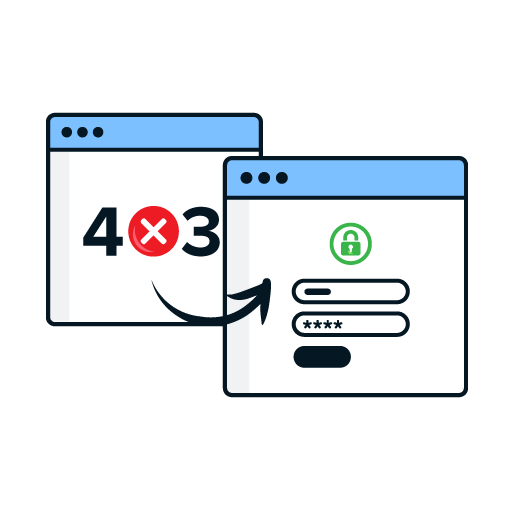
Redirect the HTTP 403 error page to the Drupal /user/login page with an optional message that reads: "Access denied! You must login to view this page." Also, the desired page is appended in the url...
Categories: Access control
Image URL Formatter
This module add a url formatter for image field. Then you can output image url directly. Most of the code, maybe more than 90%, is just copy from the drupal core. I think it is stable enough. I...
Categories: Content editing experience, Site structure
Views Accordion
Views Accordion provides a display style plugin for the Views module. It will take the results and display them as a JQuery accordion, using the first field as the header for the accordion rows....
Categories: Content display, Developer tools
Pathologic
Pathologic is an input filter which can correct paths in links and images in your Drupal content in situations which would otherwise cause them to “break;” for example, if the URL of...
Categories: Content editing experience
Content-Security-Policy
The Content-Security-Policy header allows your Drupal site to inform browsers of trusted sources for JavaScript, CSS, and other external resources. This adds a security layer to detect and mitigate...
Categories: Integrations, Security