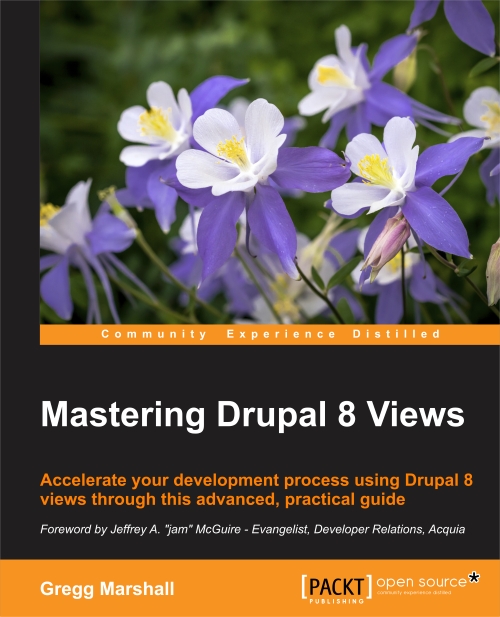
Accelerate your development process using Drupal 8 Views through this advanced, practical guide.
Key features
A practical, step-by-step guide with illustrative examples to give you a clear understanding of Drupal 8 views
Get the only book on the market that talks about Drupal 8 views and their importance for developers
Get an understanding of how views work and how they help to create modular applications
Topic and description
Learn how to build complex displays of content—all without programming.
Views was used on more than 80% of all Drupal 7 sites; now it is part of the Drupal 8 core. While many site builders and site owners are aware of Views, they don't understand how to take full advantage of its power to create many amazing pages and blocks. If they are using Views, they might build 10 different view displays with different filters, without knowing that a contextual filter would require only a single display.
Using our sample company, we'll take its existing content and evolve an ever more complex and powerful website for that company, starting with adapting the administration the user sees and moving on to making complex pages of information for site visitors.
While the book is written for Drupal 8, the similarities between Views in Drupal 7 and 8 make this a useful reference for Drupal 7 site builders also.
What you will learn
Create displays of content that are automatically updated when you add new content
Show maps and rotating image carousels on your site
Combine content to create composite displays using the same data in different ways
Use fields from more than one content type to create powerful views of multi-table data
Modify the field data being displayed, combining it in different ways or changing the HTML that might be normally generated
Add headers and footers above and below a views display
Make the output of your view look exactly as the designer specifies
Change the order in which a list of content is displayed, and limit the content shown to certain content types or values
Filter content using values passed to the view in the URL, making a single view work in different ways
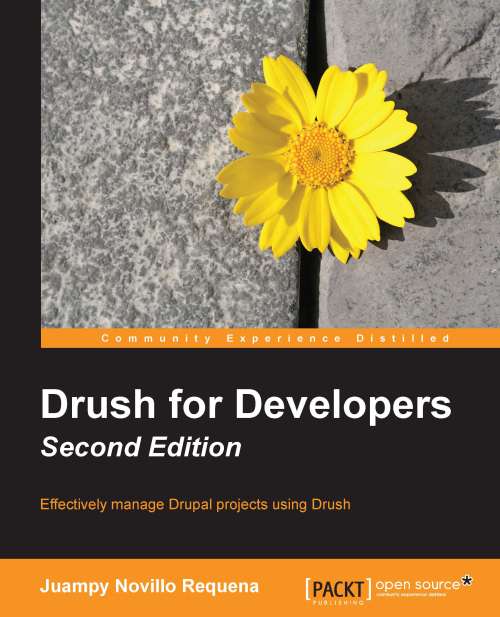
Drush for Developers, Second Edition, takes common challenges in Drupal projects and solves them using Drush. This book starts with the different installation approaches for Drush and its command structure. It then moves on to perhaps the trickiest challenge in Drupal projects: keeping code and configuration together during a project's lifetime. Next, we will deep dive into the tasks needed to keep a website under control and learn how to run, automate, and monitor them effectively.
Error validating and debugging our Drush commands is a must and this book has a whole chapter on that topic. The magic of managing remote Drupal projects through Drush site aliases is explained in the following chapters through a practical example. Finally, the book wraps up by putting in practice all the concepts covered in previous chapters in order to implement a development workflow for a team.