

Add functionality and customize your Drupal application with thousands of projects contributed by our amazing community.
A module is code that extends Drupal's by altering existing functionality or adding new features. You can use modules contributed by others or create your own. Learn more about creating and using Drupal modules.
 View Unpublished
Description: This module allows you to grant access for specific user roles to view unpublished nodes of a specific type of other user. Access control is quite granular in this regard. Additionally...
Categories: Access control
User protect
This module allows fine-grained access control of user administrators, by providing various editing protection for users. The protections can be specific to a user, or applied to all users in a...
Categories: Access control
Automated Logout
This module provides a site administrator the ability to log users out after a specified time of inactivity. It is highly customisable and includes role-specific "site policies" to enforce logout....
Categories: Security
Node Limit
The Node Limit module allows administrators to restrict the number of nodes of a specific type that roles or users may create. For example, if a site has an "Advertiser" role that can create ...
Password Policy
This module supports enforcing restrictions on user passwords by defining password policies. Overview A password policy can be defined with a set of constraints which must be met before a user...
Categories: Access control, Security
Field Permissions
The Field Permissions module allows site administrators to set field-level permissions to edit, view and create fields on any entity. Features Enable field permissions on any entity, not just nodes...
Categories: Access control, Content display
 Pathauto
The Pathauto module automatically generates URL/path aliases for various kinds of content (nodes, taxonomy terms, users) without requiring the user to manually specify the path alias. This allows...
Categories: Automation, Search engine optimization (SEO)
 Role Delegation
This module allows site administrators to grant specific roles the authority to assign selected roles to users, without them needing the administer permissions permission. For each role, Role...
Categories: Access control, Security
 IMCE
IMCE
IMCE is a file manager featuring personal directories and quotas. Features Upload/delete files, resize images. Support for file systems: private, s3, google Configuration per role: file size/type,...
Categories: Content editing experience, Media
 Session Limit
Session Limit allows administrators to limit the number of simultaneous sessions per user. Max session is configurable, no database tables needed. By default, a session is created for each browser...
 Token
Token
Provides placeholder variables (tokens) and an interface for browsing available tokens. As records are displayed, contextual values are replaced, such as [node:title] or [user:name]. See full list...
Categories: Automation, Developer tools
Menu Per Role
This module allows you to restrict access to menu items based on user roles. Just activate the module and edit a menu item as usual. There will be a new fieldset that allows you to restrict access...
Categories: Content display
 Flag
Flag
Flag is a flexible flagging system that is completely customizable by the administrator. Using this module, the site administrator can provide any number of flags for nodes, comments, users, and...
Categories: Automation, Content editing experience, User engagement
 Admin Toolbar
What is the Admin Toolbar module? The Admin Toolbar module intends to improve the default Toolbar (the administration menu at the top of your site) to transform it into a drop-down menu, providing...
Categories: Administration tools
Entity Clone
What is this module? This module adds a new entity operation which allows Drupal to clone many of the entities (config & content) provided by Drupal core. Compatibility At this time, Node, File,...
Categories: Content editing experience
 Layout Builder Restrictions
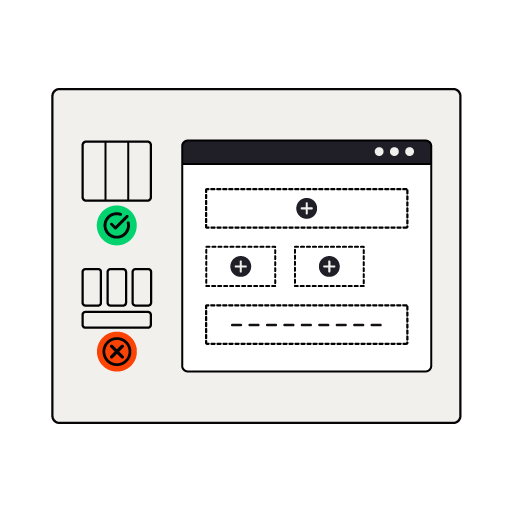
SummaryThis module provides a configurable UI for restricting blocks and layouts. Sites can allow all options from a certain provider, or restrict all options by provider, or specify individual...
Categories: Content display
Allowed Formats
Important updates in the 3.0.0 release (3.0.x branch) Since Drupal 10.1.0, limiting the text formats per field instance is a feature provided by Drupal core. Read https://www.drupal.org/node...
Categories: Content editing experience
Panels
An Overview of Panels The Panels module allows a site administrator to create customized layouts for multiple uses. At its core it is a drag and drop content manager that lets you visually design a...
Categories: Content display
Entity Limit
Entity Limit allows administrators to restrict the creation of the number of entities that users may create. Basically, this module provides options to define a creation limit based on user and...
Categories: Access control
 Gin Toolbar
Helper module to bring the Gin Toolbar into the Frontend of your site. Requires the Gin Admin Theme. This module is needed due to some technical limitations of Drupal (Admin) themes. ⚠️ Please add...
Categories: Administration tools, Content editing experience, Site structure
Rabbit Hole
What is this? Rabbit Hole is a module that adds the ability to control what should happen when an entity is being viewed at its own page. Perhaps you have a content type that never should be...
RoleAssign
RoleAssign specifically allows site administrators to further delegate the task of managing user's roles while withholding the Administer permissions permission. RoleAssign introduces a new...
Categories: Access control
 Better Exposed Filters
The Better Exposed Filters module replaces the Views' default single- or multi-select boxes with radio buttons or checkboxes, respectively. Description fields and Select All/None links can be added...
Categories: Administration tools
Account field split
About Currently the draggable field "Username and password" on user profile mashes together: Username Current password E-mail address Change Password Roles Status Notify user about new account ...
Categories: Content display, Content editing experience, Site structure
 JSON:API Extras
The JSON:API module in code provides zero configuration out of the box. Use JSON:API Extras to customize your API. JSON:API Extras provides a means to override and provide limited configurations to...
Categories: Decoupled