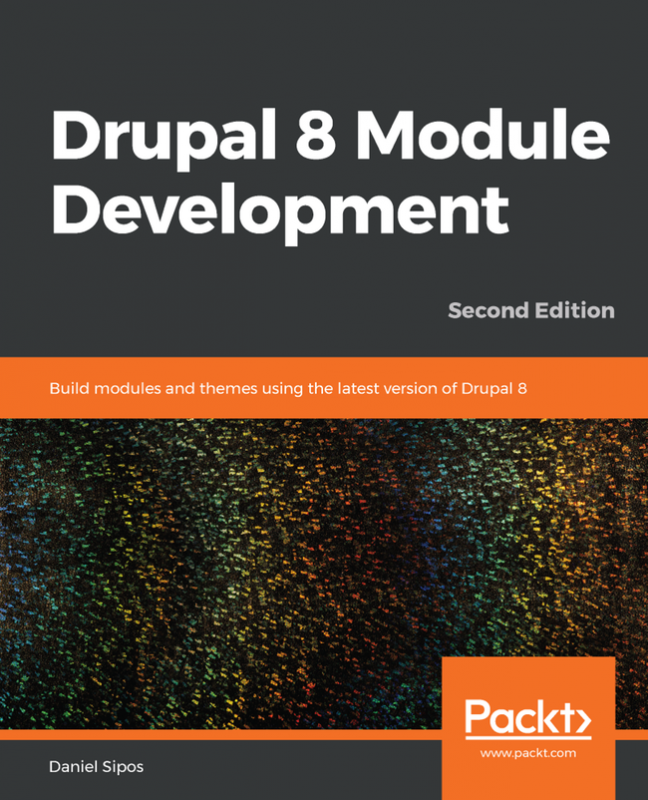
Drupal 8 module development, 2nd edition

Authors: 

Daniel Sipos
with Foreword by Dries Buytaert, founder of Drupal.

Publisher: 
Packt Publishing
Publication date: 
2019-03
Page count: 
580
ISBN-13: 
9781789612363

Drupal 8 comes with a release cycle that allows for new functionality to be added at a much faster pace. However, this also means code deprecations and changing architecture that you need to stay on top of. This book updates the first edition and includes the new functionality introduced in versions up to, and including 8.7.

The book will first introduce you to the Drupal 8 architecture and its subsystems before diving into creating your first module with basic functionality. You will work with the Drupal logging and mailing systems, learn how to output data using the theme layer and work with menus and links programmatically. Then, you will learn how to work with different kinds of data storages, create custom entities, field types and leverage the Database API for lower level database queries.

You will further see how to introduce JavaScript into your module, work with the various file systems and ensure the code you write works on multilingual sites. Finally, you will learn how to programmatically work with Views, write automated tests for your functionality and also write secure code in general.

By the end, you will have learned how to develop your own custom module that can provide complex business solutions. And who knows, maybe you’ll even contribute it back to the Drupal community.

Foreword by Dries Buytaert, founder of Drupal.

Drupal 8 Module Development

Sub-title: 
Build and customize Drupal 8 modules and extensions efficiently
Authors: 
Publisher: 
Packt Publishing
Publication date: 
2017-11
Page count: 
566
ISBN-13: 
9781782168775

Drupal is an open source web-based content management system (CMS) that can be used for building anything from simple websites to complex applications. It enables individuals and organizations to build platforms that engage users and deliver the right content at the right time.

Drupal 8 is an exciting new development in the Drupal community. However, the differences from the previous version are substantial and this can put quite some pressure on Drupal 7 developers that need to catch up. This book aims to help such developers in getting up to speed with Drupal 8 module development.

The book first introduces you to the Drupal 8 architecture and its subsystems before diving into creating your first module with basic functionality. Building upon that, you will cover many core APIs and functionalities available to module developers.

You will work with the Drupal logging and mailing systems, learn how to output data using the theme layer, and work with menus and links programmatically. Then, you will learn how to work with different kinds of data storages, create custom entities, field types, and leverage the Database API for lower level database queries. Moreover, you will learn about the Drupal 8 access system and caching layer as well as the APIs used for data processing (queues and batches).

You will further see how to introduce javascript into your module, work with the various file systems, and ensure the code you write works on multilingual sites. Finally, you will learn how to programmatically work with Views, write automated tests for your functionality, and also write secure code in general.

By the end of the book, you will have learned how to develop your own custom module from scratch that can help solve a small problem or even provide complex functionality. And who knows, maybe you’ll even contribute it back to the Drupal community.
Drupal 8 Development: Beginner's Guide

Sub-title: 
Explore the new features of Drupal 8 through practical and interesting examples while building a fully functional recipe sharing website
Publisher: 
Packt Publishing
Publication date: 
2016-07
Page count: 
398
ISBN-13: 
978-1785284885

Drupal is one of the most popular platforms with which to develop websites. With more and more organizations looking to build engaging digital experience for their stakeholders, the Drupal Content Management System offers a mobile-first platform with native support for integrations, better performance, and scalability. The new version brings significant changes to its module development and theme creation techniques, improving performance and refining the development experience.

This book will help you develop your own website using Drupal 8 in a step-by-step manner. You’ll start off by setting up your development environment, enabling you to begin writing custom code for a Drupal-powered website through PHPStorm. You will learn about configuration management and creating custom content types before exploring the HTML5 features included with Drupal 8.

You will then get familiar with Drupal 8’s mobile-first features, explore the built-in WYSIWYG and in-line editing capabilities of Drupal 8, and enhance the overall authoring experience. Later, you will create and enhance a Media Entity Lightbox module, before taking an in-depth look at the Views module.

We then cover some advanced search concepts and walk you through the installation and integration of the Java-based Apache Solr search engine. Finally, you will explore and configure the built-in support for REST and extend its support by installing the RESTful module. By the end of the book, you will have created a recipe sharing website while gaining a solid understanding of development best practices for Drupal 8.

What you will learn

  • Set up your Drupal development environment
  • Brush up on your understanding of the concepts of object-oriented programming, module development, and test-driven development
  • Install and configure Drupal, add new content type, and work through lot of dummy content to create listing pages using views
  • Enhance the content author’s user experience and custom block
  • Find out about field Type API and explore custom theme development
  • Manage various media types in Drupal for your content-rich website
Subscribe with RSS Subscribe to RSS - module development