Building E-Commerce Sites with Drupal Commerce Cookbook

Cover image for this book
Sub-title: 
Over 50 recipes to help you build engaging, responsive E-commerce sites with Drupal Commerce
Authors: 
Publisher: 
Packt Publishing
Publication date: 
2013-06
Page count: 
206
ISBN-13: 
978-1782161226

What you will learn from this book

  • Start selling on the web with Drupal Commerce
  • Improve your store’s search engine friendliness
  • Customise the look and feel of your store
  • Streamline the way you manage your store with hints and tips for everyday management
  • Calculate the correct tax on your orders
  • Manage customer profiles to make both your life and your customers’ lives easier
  • Create custom product types to allow files uploads, colour and size variations, and more
  • Includes end-to-end T-shirt shop tutorial and blueprint

In Detail

Get to grips with Drupal Commerce, the new ecommerce framework based on the Drupal CMS , one of the most popular and powerful open source content management systems available.

"Building E-commerce Sites with Drupal Commerce Cookbook" takes you through the installation, configuration, and customisation of your Drupal Commerce store. With clear, practical recipes with plenty of screenshots and tips this book will help you build attractive and profitable eCommerce sites.

This book starts by showing you how to install and configure your Drupal Commerce store. Once your shop is up and running, you’ll then learn how to customise and optimise it to make it stand out and display your products better.

Going further into customisation, you will learn to add custom product types before creating a stylish new Drupal theme for your store. Packed with tips, this book will also help guide you through common problems, as well as optimising and managing your store on a day to day basis.

"Building E-commerce Sites with Drupal Commerce Cookbook" will guide you through everything you need to know to get your online store up and running and selling your products, with easy step-by-step guides and screenshots to help walk you through everything.

Approach

"Building E-commerce Sites with Drupal Commerce Cookbook" is written in a helpful, practical style with numerous hands-on recipes to help you build attractive eCommerce sites.

Who this book is for

This book is primarily for store owners and web designers with little or no experience of Drupal and Drupal Commerce who want to build and customise a store in Drupal Commerce. You will have a basic knowledge of websites, but you don’t need to be familiar with Drupal or PHP. However, this book would also suit experienced Drupal and Ubercart users who want to migrate to or build a Drupal Commerce store.

Getting Started with Drupal Commerce

Cover image for this book
Sub-title: 
Learn everything that you need to know in order to get your first Drupal Commerce website set up and trading
Authors: 
Publisher: 
Packt Publishing
Publication date: 
2013-09
Page count: 
152
ISBN-13: 
978-1783280230

What you will learn from this book

  • Learn the fundamental concepts of Drupal Commerce
  • Install Drupal and Drupal Commerce in a local development environment
  • Plan an e-shop for building in Drupal Commerce
  • Install and configure Drupal Commerce
  • Set up a product catalogue and learn the difference between product displays and variations
  • Configure VAT and sales tax
  • Set up the checkout process
  • Create price variations and special offers for products and customers
  • Manage the order process in Commerce Backoffice
  • Extend Commerce with more contributed modules

In Detail

Drupal Commerce is emerging as the preferred option for open source e-commerce, and it also stands up to comparison against established proprietary systems.

Getting Started with Drupal Commerce is an introductory guide to building an online store using Drupal Commerce in Drupal 7.

Getting Started with Drupal Commerce takes you step-by-step through a complete e-commerce website build, from a clean installation of Drupal to a working example store. Starting with how to set up a Drupal development environment, we then discuss the planning of an e-commerce site and the typical questions you should be asking before getting started.

Next, we walk through all of the essential setup required for most types of e-shop, including taxes, shipping, discounts and coupons, the checkout process, and backend order management. By the end of Getting Started with Drupal Commerce, you will be fully-equipped to plan and build your own store and you will understand the fundamental principles of Drupal Commerce that will enable you to progress to more complex store builds.

Approach

A simple yet concise step-by-step tutorial that starts from scratch and builds up your knowledge with focused examples that will enable you to set up and run an e-commerce website.

Who this book is for

This book is for beginners and will take you through the installation and configuration of Drupal Commerce from scratch, but some familiarity with Drupal 7 will be an advantage. All examples are based on development on a local computer – you do not need a hosted Drupal environment.

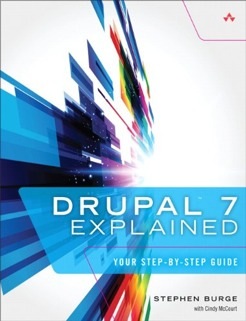
Drupal 7 Explained

Cover image for this book
Sub-title: 
Your Step-by-Step Guide
Authors: 
Publisher: 
Prentice Hall
Publication date: 
2013-05
Page count: 
480
ISBN-13: 
978-0133124231

Drupal 7 Explained is for people who want a fun and clear introduction to Drupal.

Drupal 7 Explained requires absolutely no experience with Drupal, content management, site construction, programming, scripting, or even HTML.

Discover what Drupal does and how it works; then install Drupal 7, master site administration, simplify site creation via workflows, create highly-usable navigation, and much more.

Quickly change site designs with themes; find, choose, install, and use modules, including Views; create advanced layouts with Display Suite Panels; customize user access; update and back up your sites; and build multiple site types, step by step!

Please note: This is book is 100% aimed at Drupal beginners. Drupal 7 Explained contains no code and that is absolutely deliberate. If you want to learn how to create themes or code modules, there are other books for you.

Drupal for Education and E-Learning - Second Edition

Cover image for this book
Sub-title: 
Create web-based, content-rich tools for teaching and learning
Authors: 

James G. Robertson
Bill Fitzgerald

Publisher: 
Packt Publishing
Publication date: 
2013-06
Page count: 
390
ISBN-13: 
9781782162766

What you will learn from this book

Build an intuitive structure to allow students and teachers to find relevant content by creating blogs for both teachers and students
Create roles and permissions for controlling access to different parts of the site
Share and manage bookmarks, podcasts, images, and video to support teaching and learning
Foster discussion and communication among teachers, students, and also the larger school community to collaborate on projects
Support multiple classes within the same site
Publish assignments for students in your courses, and track student responses to those assignments
Learn to exchange help with the Drupal community
Discover how to backup and maintain your site once it is built

In Detail

As social networks become more popular, their role in the classroom has come under scrutiny. Drupal offers a wide variety of useful tools for educators. Within a single Drupal site, you can set up social bookmarking, podcasting, video hosting, formal and informal groups, rich user profiles, and other features commonly associated with social web communities.

"Drupal for Education and E-Learning - Second Edition" teaches you how to create your own social networking site to advance teaching and learning goals in the classroom, while giving you complete control over features and access. Communicate with students, share learning resources, and track assignments through simple tasks with this hands-on guide.

In this book you will learn to install and configure the default Drupal distribution and then extend it to include blogs, bookmarks, a media sharing platform, and discussion forums.

The book also covers how to organize your site to easily track student work on the site, and how to control who has access to that information. Additionally, it teaches you how to make the site easy to use, how to maintain the site, and how to ask for and receive help in the Drupal community.

Approach

With clear instructions and plenty of screenshots, this book provides all the support and guidance you will need as you begin to create your classroom website. Step-by-step tutorials show you how to use Drupal in the most efficient and effective ways possible. People new to Drupal will find a good introduction of the basics; while more experienced users will learn useful tips and tricks for using Drupal in a classroom context.

Who this book is for

If you are an teacher, tutor or an educator who wants to build a website for your classroom, be it elementary or any higher education, "Drupal for Education and E-Learning - Second Edition" will guide you in achieving your goal at every step. No experience with programming languages, HTML, or CSS is needed to understand the examples in this book.

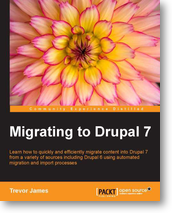
Migrating to Drupal 7

Cover image for this book
Sub-title: 
Learn how to quickly and efficiently migrate content into Drupal 7 from a variety of sources including Drupal 6 using automated migration and import processes.
Authors: 
Publisher: 
Packt Publishing
Publication date: 
2012-12
Page count: 
158
ISBN-13: 
9781782160540

What you will learn from this book

  • Configure your Drupal site to run imports of migrated content using the Feeds module
  • Run an import of migrated content using Feeds module and a Feed importer
  • Package your configuration using the Features module
  • Utilize the Migrate module and its benefits
  • Migrate blog posts from WordPress to Drupal
  • Upgrade your Drupal 6 site to Drupal 7
  • Configure the Feeds Tamper module to preprocess your Feeds imports
  • Run additional imports using the Feeds modules to update and add new data and content to your Drupal site

In Detail

This book will show you how to migrate your content into the Drupal content management system. You’ll start by building a content type in Drupal to hold your migrated content. You’ll then import your content into Drupal using the Feeds module. In order to be able to easily use them again and again, you will also learn the best methods of maintaining and packaging migration configurations.

In "Migrating to Drupal 7" you’ll learn how to quickly package your legacy site’s data into a format that’s easy to import into Drupal. You’ll then build a content type to hold migrated data in Drupal. To save time and hassle you will learn how to import content into Drupal using the Feeds module. You’ll then get a brief introduction to the Migrate module and its powerful features.

With this guide you’ll also learn how to upgrade your Drupal 6 website to Drupal 7 in short, simple steps. You’ll also learn how to package your configuration code in Drupal using the powerful Features module.

In "Migrating to Drupal 7" you’ll start by collecting your current site’s content and packaging it up into a CSV file so you can easily import it into Drupal. You’ll then build a content type to hold your migrated data and content.

Mastering migrations using the Feeds module will be the next invaluable tutorial before you get a closer look at the Migrate module’s powerful features. You’ll then upgrade your Drupal 6 site to Drupal 7 and use helper modules to help run the upgrade faster and with less hassle. This book will then take you through the process of migrating CCK-based Drupal 6 fields to Drupal 7 using the Content Migrate module.

Using the Features module you will then package up our Feeds importer and content types into code to help you to build an easily maintainable and flexible Drupal website with.

Approach

Written in a friendly and engaging style with practical tutorials and step-by-step examples which show you how to easily migrate your Drupal 6 or WordPress site to Drupal 7.

Who this book is for

"Migrating to Drupal 7" is for anyone interested in how to move content from an existing website into the Drupal content management system. Both novice and advanced Drupal users will gain practical hands-on knowledge in how to migrate content into Drupal using this book. You will become experts in using the Feeds module to migrate content, and in packaging your code using Features.

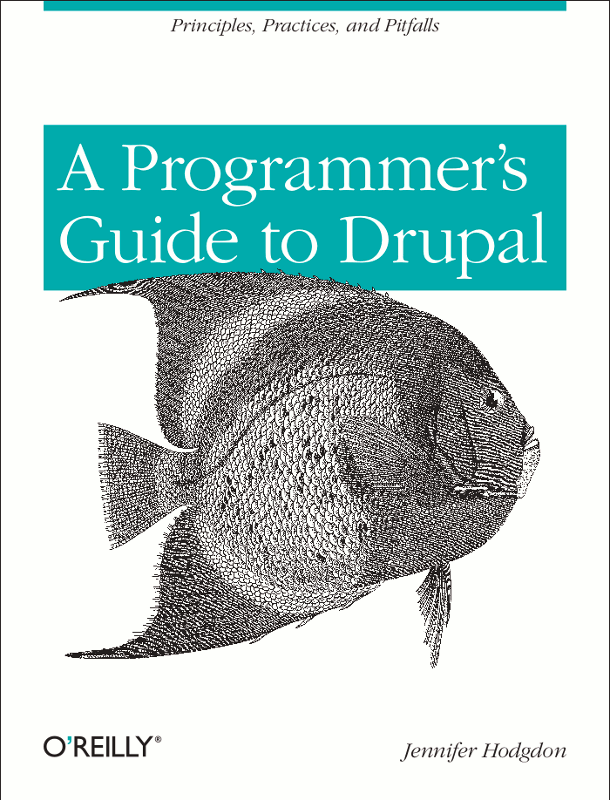
Programmer's Guide to Drupal

Sub-title: 
Principles, Practices, and Pitfalls
Publisher: 
O'Reilly Media
Publication date: 
2012-12
Page count: 
114
ISBN-13: 
978-1449343316

Note: This edition is out of print. The 2nd edition of this book is now available; contains all of the content of the first edition, plus Drupal 8 content.

If you’re a web programmer new to Drupal, this book shows you which programming techniques you can use—and which you should avoid—when building custom web applications with this content management framework. Drupal has its own set of programming principles that require a different approach, and many programmers make mistakes when relying on skills they’ve used for other projects. The guidelines in this book help you through the transition by demonstrating which programming practices conform to the “Drupal way,” and which don’t.

If you’re familiar with PHP, you’ll quickly learn how to take advantage of the powerful Drupal API.

  • Get a complete overview of Drupal, including Drupal core and add-on modules and themes
  • Learn Drupal’s basic programming principles, such as the ability to customize behavior and output with hooks
  • Discover common Drupal programming mistakes—and why hacking is one of them
  • Explore specific areas where you can put your programming skills to work
  • Learn programming tips and tools to help you perfect and debug your applications

Pages

Subscribe with RSS Subscribe to RSS - Beginner